COFFEE
AeroPress vs French Press (2026): Which Brew Method Should You Buy?
AeroPress and French press both steep grounds in hot water, then separate the liquid from the coffee. That is where the similarity ends. An AeroPress uses air pressure and a paper microfilter for a fast, clean cup that travels well. A French press uses a mesh plunger for a fuller-bodied carafe you can share. This guide explains the real differences, then recommends the AeroPress Original and three French presses sold on Amazon. We did not brew these side by side in a lab; every figure comes from the maker or the listing. Holiday gift lists often include both gadgets, yet most kitchens only need one immersion method plus a decent grinder. If you already own a French press and hate the sediment, an AeroPress or an ESPRO-style dual-filter press solves different problems than buying a second glass carafe.
Disclosure: This post contains affiliate links. If you buy through these links, we may earn a commission at no extra cost to you. As an Amazon Associate I earn from qualifying purchases.
Quick Picks
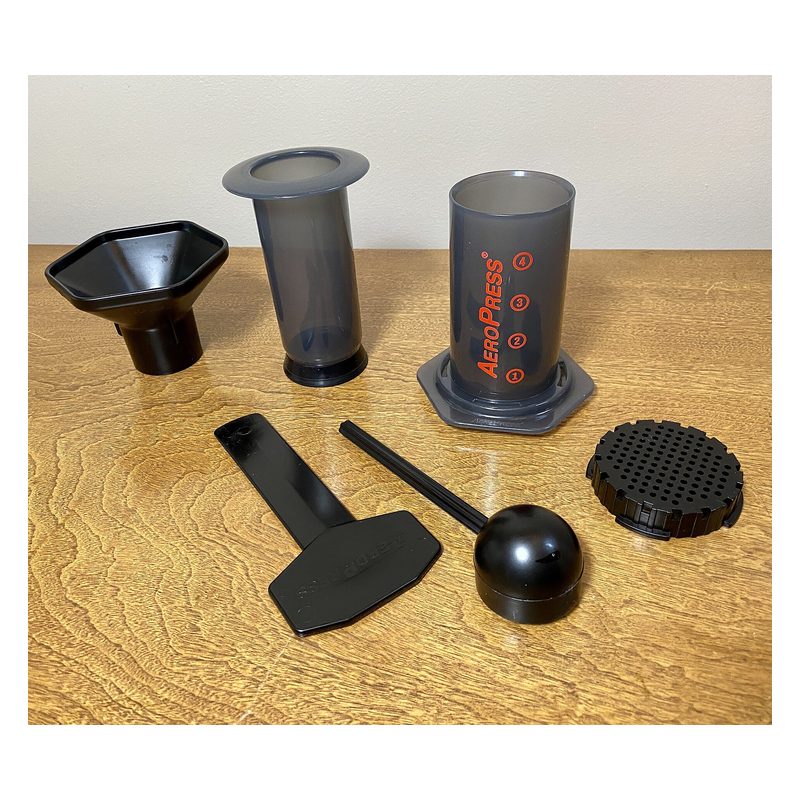
AeroPress Original
Best for Travel and Single Cups
AeroPress Original: compact immersion-plus-pressure brewer with paper microfilters for a smooth cup in about two minutes.
Pros
- Fast brew and easy cleanup
- Paper microfilter clarity
Cons
- Single-mug focus
OXO Brew 8-Cup French Press
Best Glass French Press
OXO Brew 8-cup French press with a GroundsLifter that lifts spent grounds for less-messy cleanup.
Pros
- GroundsLifter cleanup aid
- 8-cup glass carafe
Cons
- Glass can break

Frieling French Press
Best Insulated Stainless Press
Frieling double-wall stainless French press that holds heat longer than glass and can serve at the table.
Pros
- Double-wall heat retention
- Durable stainless body
Cons
- Capacity wording can vary by listing
How we chose
We did not run lab or hands-on tests for this guide. Instead we read each product’s Amazon listing and the manufacturer’s published specifications, then looked for patterns in the customer feedback summaries that Amazon shows on each listing. Where a listing gives a number, we repeat it as the listing’s claim. Where we could not find reliable details, we say so rather than guess.
We checked every Amazon listing below on November 7, 2026. We compared brew style, filter type, capacity, materials and cleanup claims, and we preferred clear maker language over vague “barista quality” marketing.
Read more about our method on our How We Research page.
The short answer
Buy an AeroPress if you want a single great cup in about two minutes, easy cleanup and a packable brewer for travel. Buy a French press if you want a shared carafe with more body and oils. Among presses, choose OXO for an easy grounds lifter, Frieling for insulated stainless, and ESPRO P7 for a dual-filter cleaner cup.
Every coffee guide lives in our Coffee Guide. Also see best French presses and best pour-over makers.
AeroPress vs French press at a glance
| AeroPress Original | French press | |
|---|---|---|
| Brew time | About 1–2 minutes after water is hot | Typically 3–4 minutes steep |
| Filter | Paper microfilters (50 included on many listings) | Mesh plunger; some models add dual mesh or paper |
| Body | Cleaner, less sediment | Fuller body, more oils and fines |
| Batch | About one mug (maker lists roughly 1–3 American-style servings depending on recipe) | Often 3–8 cups depending on model |
| Travel | Compact, shatter-resistant Tritan | Glass models are fragile; stainless travels better |
| Cleanup | Eject puck and rinse | Plunge, discard grounds, wash mesh |
AeroPress describes air pressure plus micro-filtration for a fast cup; see AeroPress.
When to choose each
Choose AeroPress for offices, hotels, camping and anyone who wants less grit without buying an espresso machine. Choose French press for weekend carafes, tea steeping on some models and a classic table presence.
If you already own a good burr grinder, both methods reward a medium-coarse grind. Fine espresso grinds can clog a press mesh and over-extract an AeroPress.
Grind size and water
Both methods like a medium-coarse grind closer to sea salt than espresso powder. Too fine and a French press gets muddy; too fine in an AeroPress can make the plunge hard and bitter. Use water just off the boil for most recipes, then adjust cooler if you taste harshness.
Dose by weight when you can. A common AeroPress starting point is roughly one rounded AeroPress scoop of grounds; French press recipes often land near a 1:15 coffee-to-water ratio by weight. Treat those as starting points, not laws.
Holiday gift angle
An AeroPress is an easy stocking-level gift for travelers and new coffee people. A Frieling or ESPRO press is a stronger host gift when someone already likes immersion brewing. Pair either with a simple burr grinder from our grinder guides if their current grinder is a blade mill.
The complete reviews
AeroPress Original Coffee Maker
Best for Travel and Single Cups
AeroPress lists the Original as a portable Tritan brewer that combines immersion and air pressure with paper microfilters, typically brewing in about two minutes. Listings commonly include a scoop, stirrer, funnel, filter holder and a pack of about 350 microfilters depending on package. The maker emphasizes lower bitterness versus some other methods and easy cleanup by ejecting the puck.
This is the clear pick when portability and a clean single cup matter more than a shared carafe.
It is not a full carafe brewer. Owner feedback we read is strongly positive on taste and travel; paper filters are a recurring cost.
Who it’s for: Travelers, campers and single-cup drinkers who want a fast, grit-free cup with paper microfilters and a compact, shatter-resistant body.
Who it’s not for: Households that brew a full carafe for guests every morning, or who refuse paper filters.
Pros
- Fast brew and easy cleanup
- Paper microfilter clarity
- Packable and durable
Cons
- Single-mug focus
- Ongoing paper filter use
OXO Brew 8-Cup French Press with GroundsLifter
Best Glass French Press
OXO lists an 8-cup borosilicate glass carafe with a stainless exterior, a fine mesh filter and a GroundsLifter designed to remove grounds after brewing. Soft nonslip grips round out the everyday design.
Choose OXO when you want a classic glass press with a cleanup feature that reduces the usual sludge dance at the sink.
Glass still breaks if you knock it around. Owner feedback we read likes the lifter and build.
Who it’s for: Home brewers who want an 8-cup glass French press with a grounds lifter that makes cleanup less messy.
Who it’s not for: Travelers who need something shatterproof and backpack-sized, or who want espresso-style concentrated shots.
Pros
- GroundsLifter cleanup aid
- 8-cup glass carafe
- Comfortable plunger grip
Cons
- Glass can break
- Not travel-first
Frieling Double-Walled Stainless Steel French Press, 36 oz
Best Insulated Stainless Press
Frieling lists double-wall 18/10 stainless construction with a mesh plunger. Note that some listings title a 36-ounce size while a bullet on the same page cites about 23 ounces—confirm the capacity on the exact option you buy. The double wall is meant to retain heat longer than single-wall glass.
Best when you want heat retention and no glass to shatter.
You cannot watch the bloom through steel. Confirm ounce capacity on your SKU.
Who it’s for: Anyone who wants a durable double-wall stainless French press that holds heat longer than glass and doubles as a serving carafe.
Who it’s not for: Anyone who wants a clear glass carafe to watch the bloom, or the lowest-cost press.
Pros
- Double-wall heat retention
- Durable stainless body
- Table-ready carafe
Cons
- Capacity wording can vary by listing
- No visual brew cues
ESPRO P7 French Press, 32 oz, Polished Stainless Steel
Best Clean-Cup French Press
ESPRO lists a double-wall stainless P7 with a dual-layer micro-filter described as much finer than standard press mesh, a roughly 32-ounce capacity, and a pack of paper filters for pour-over-like clarity when you want less oil.
Pick the P7 when you like French press ritual but dislike sediment.
It costs more than a basic glass press. Owner feedback we read praises clarity and heat retention.
Who it’s for: Brewers who want a stainless French press with ESPRO’s dual micro-filter for a cleaner cup and optional paper filters.
Who it’s not for: Brewers who prefer the classic glass press look, or who only make one mug at a time.
Pros
- Dual micro-filter
- Double-wall stainless
- Optional paper filters included on many listings
Cons
- Higher price tier
- Heavier than plastic travel presses
Frequently Asked Questions
Is AeroPress stronger than French press?
It can brew a concentrated, espresso-style cup or a normal mug depending on recipe and water. French press strength is mostly about dose and steep time.
Which is easier to clean?
AeroPress usually wins: eject the puck and rinse. French press mesh needs a more thorough wash.
Can I travel with a French press?
Stainless models travel better than glass. AeroPress remains the more packable everyday option.
Do I need a gooseneck kettle?
Helpful for pour-over, optional for both of these immersion methods. Hot water from a standard kettle is enough to start.
Related guides
Prefer a dripper over a press? See our Chemex vs Hario V60 comparison.
Conclusion
Choose the AeroPress Original when you want speed, clarity and travel-ready brewing. Choose a French press when you want a shared carafe: OXO for easier cleanup, Frieling for insulated stainless, and ESPRO P7 when you want less sediment in a press. Pair either method with a decent burr grinder, then check current prices on Amazon. If you brew for two every morning, a French press still wins on volume. If you brew for one at work and again at home, an AeroPress often replaces a drawer full of single-serve pods without the plastic waste.